Breed-specific block · Labrador

Custom Labrador Clothes Manufacturer

MOQ 30 pcs3–5 days sampling20 days bulk lead timeLabrador block on request

We cut private-label Labrador clothes on a broad standard-dog block: the chest carries working ease, the armhole clears an athletic shoulder, and the hem stays level through a larger size run. The programme is approved on a physical sample before bulk cutting, not by scaling a small-dog block upward.

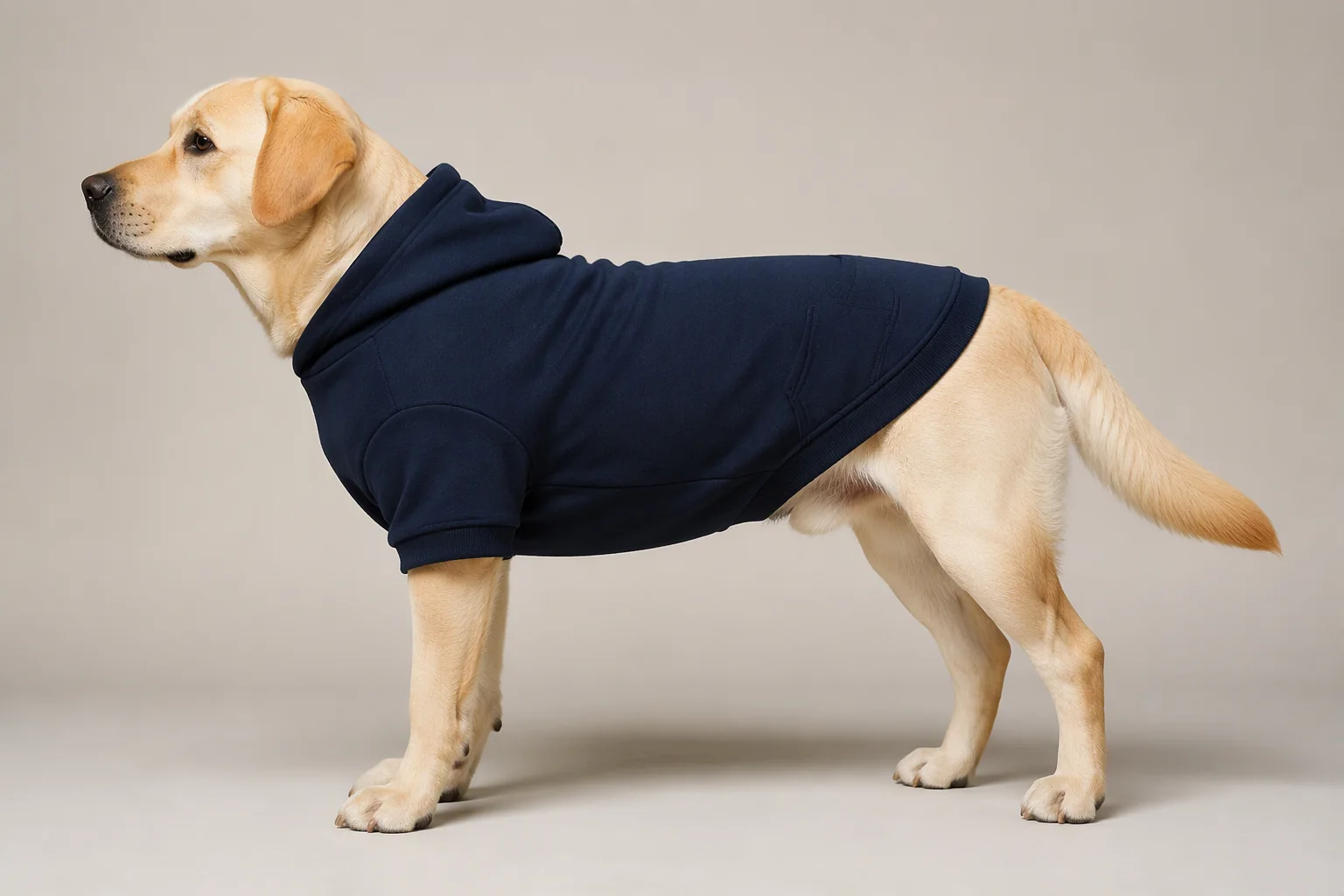
Yellow Labrador wearing a navy custom hoodie cut for a broad chest and athletic shoulder
Studio reference — Labrador block: broad chest ease, shoulder movement, standard back length and stable hem.

Pattern engineering

A Labrador is not an enlarged small-dog block

The failures show up at scale: enlarging every measurement creates a loose neck and low armhole, shortening only the back removes shoulder reach, and heavy fabric magnifies drag across the front leg. For the underlying method, see how dog hoodie blocks are graded.

01

Shoulder movement controls the armhole

A Labrador reaches forward through a broad, athletic shoulder. The armhole is placed to clear that movement; adding chest circumference without moving the opening leaves a wide garment that still binds at the front leg.

02

Broad chest does not mean loose neck

Scaling the entire block upward adds unwanted neck opening. Chest ease belongs through the front and side panels while the neckline stays stable enough to prevent the garment rotating on the body.

03

Fabric weight changes the grade

A heavier French terry or bonded softshell holds more structure than a light jersey. The shoulder and hem are checked in the selected build because one pattern cannot assume every fabric hangs the same way.

Range planning

Five builds on one Labrador block

The same broad standard curve runs through the range, but each build tests another decision: hood bulk at the neck, shoulder reach in a sweatshirt, storm-flap stability on a raincoat, armhole binding on a vest, and rear-leg reach in four-leg pyjamas.

Yellow Labrador wearing a navy custom hoodie shaped for a broad chest

Hoodie

01

The hood stays compact behind the neck while the front body carries chest ease. The hem remains level across the standard back instead of lifting behind the shoulder.

Built as: Two-panel hood, kangaroo or leash-slot pocket, ribbed hem with elastic recovery, double-needle shoulder seams.

400GSM French TerryBrushed Anti-Pill Fleece · 280–320 GSMRecycled Cotton Blend · 260–300 GSM
View hoodie specification →
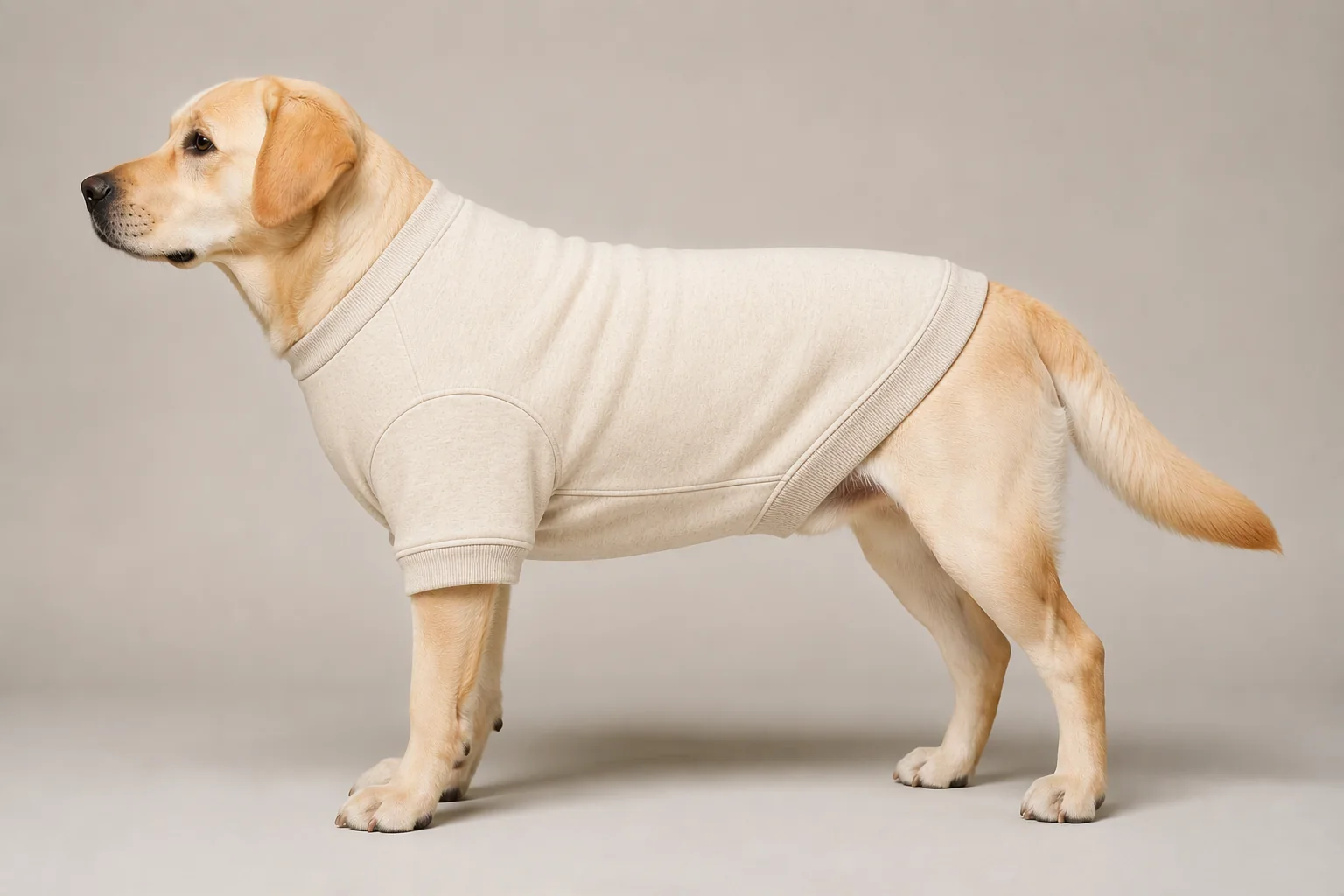
Yellow Labrador wearing an oatmeal French terry sweatshirt with set-in sleeves

Sweatshirt

02

Set-in sleeves make shoulder placement visible. The seam sits behind the front leg and the crew neck stays stable instead of opening when chest ease is added.

Built as: Set-in sleeves, ribbed cuffs and hem, single-needle neckline with a taped back neck.

400GSM French TerryBrushed Anti-Pill Fleece · 280–320 GSMRecycled Cotton Blend · 260–300 GSM
View sweatshirt specification →
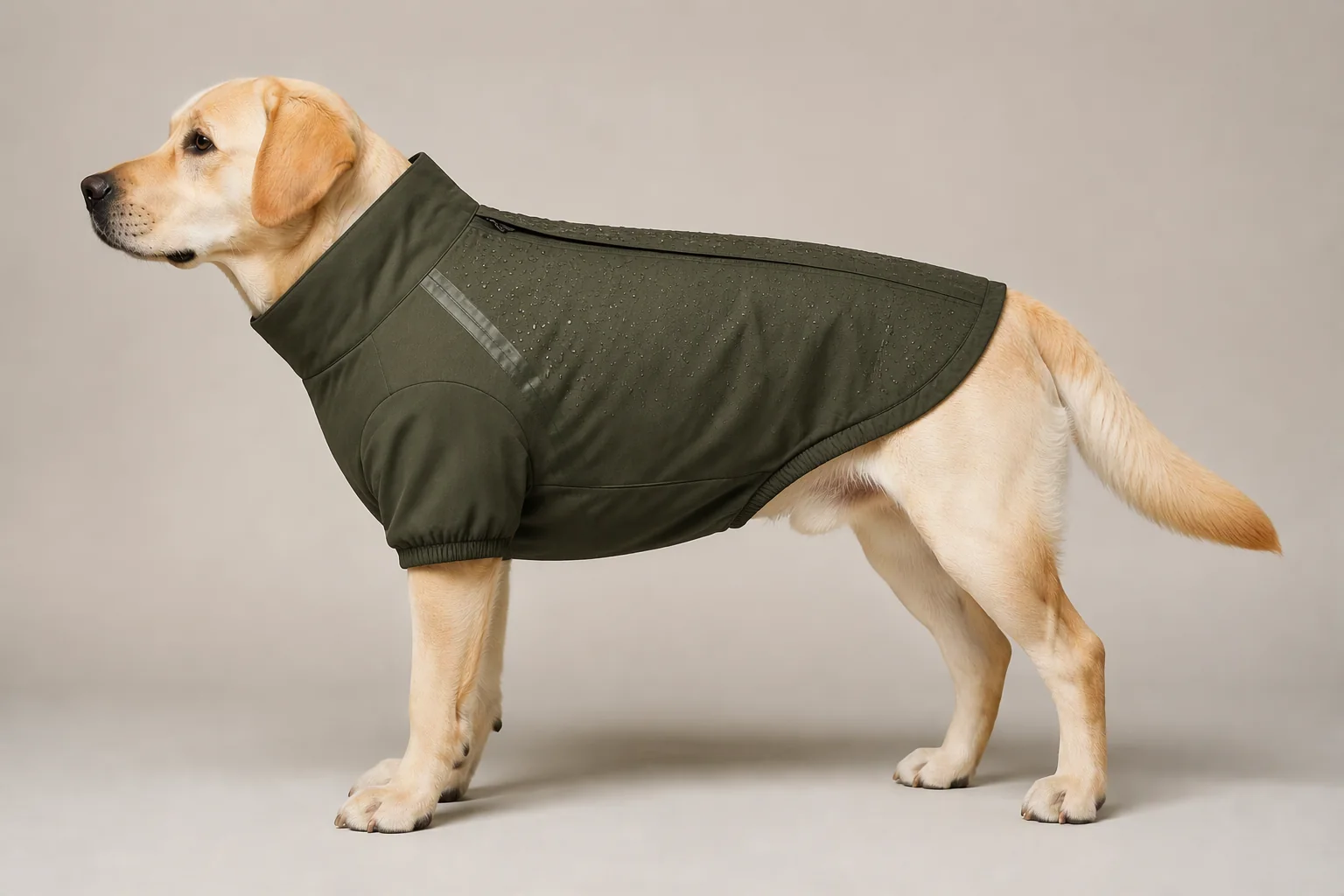
Yellow Labrador wearing an olive softshell raincoat with shoulder ease

Raincoat

03

Bonded softshell needs room to move without ballooning. The shoulder carries mechanical ease while the storm flap stays centred along a level back.

Built as: Taped or critically seam-sealed seams, storm flap over the zip, elasticated leg cuffs, optional harness opening.

Waterproof Softshell · 300–320 GSM
View raincoat specification →
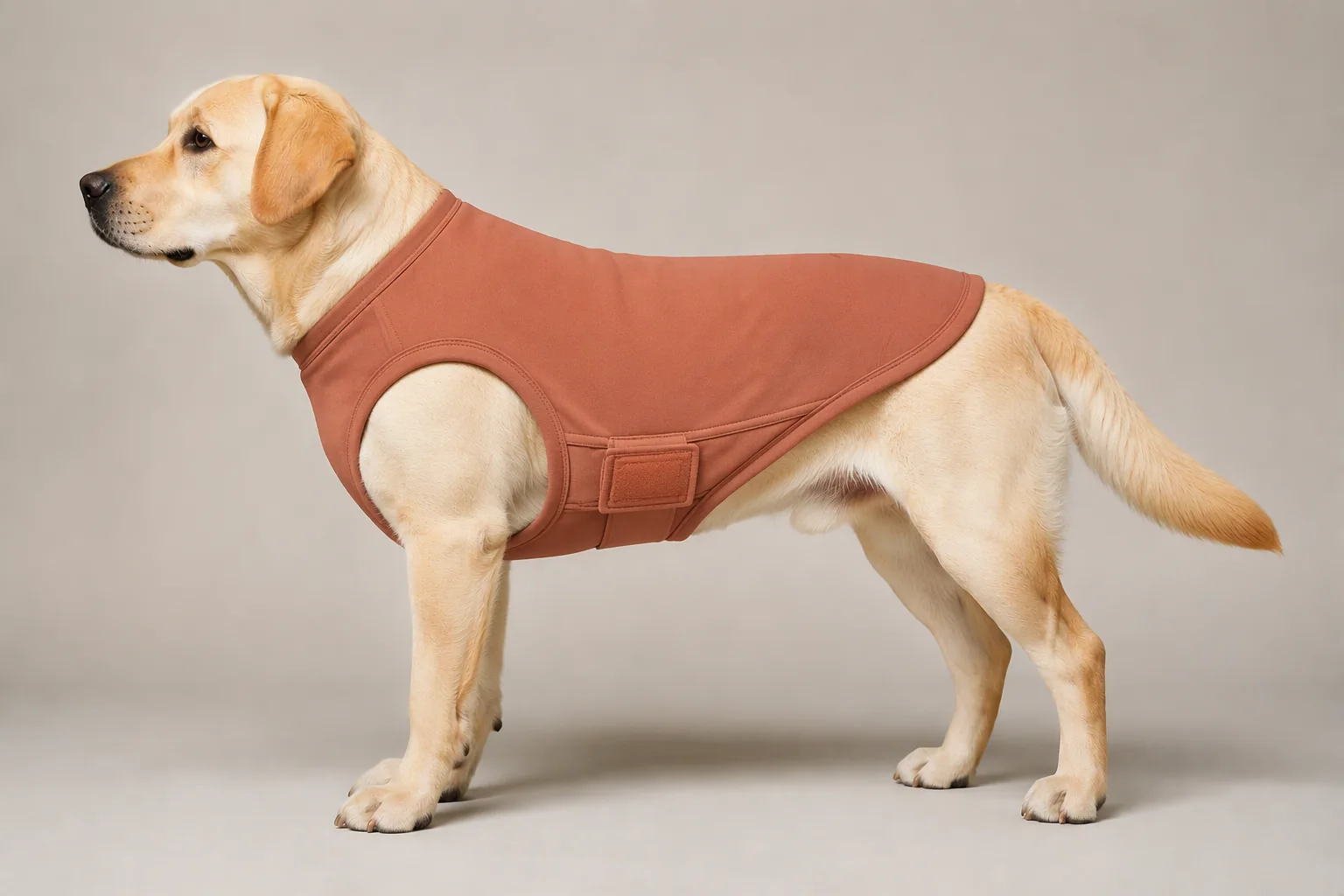
Yellow Labrador wearing a terracotta vest with bound armholes and side adjustment

Vest

04

Bound armholes are checked through the full stride. The side closure takes up girth tolerance while keeping the neck and back panel stable across the size run.

Built as: Bound armholes, adjustable side closure for girth tolerance, flat-felled seams on stress points.

Brushed Anti-Pill Fleece · 280–320 GSMWaterproof Softshell · 300–320 GSMRecycled Cotton Blend · 260–300 GSM+ embroidery / print / DTG
View vest specification →
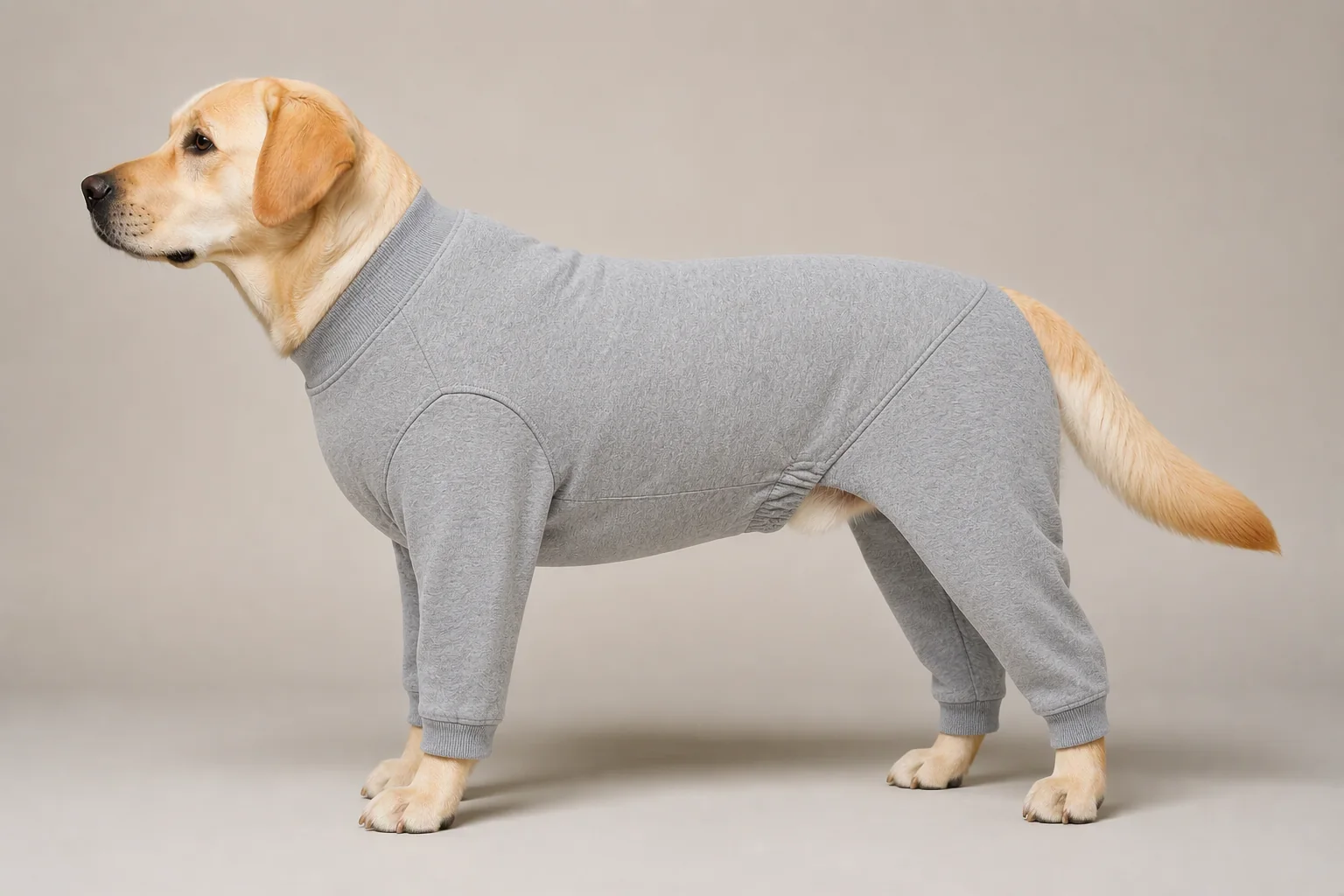
Yellow Labrador wearing grey four-leg fleece pyjamas with clear shoulder movement

Four-leg pyjamas

05

Four-leg builds have to clear a longer stride. Front and rear cuff positions are checked together so extra body size does not turn into fabric bunching behind the shoulder or hip.

Built as: Four-leg block for full coverage, relaxed body, soft covered elastic waistband.

400GSM French TerryBrushed Anti-Pill Fleece · 280–320 GSMRecycled Cotton Blend · 260–300 GSM
View pyjama specification →

Fabric weights are the specification bands we buy against. Garment measurements are confirmed on the approved sample, and the reference size chart is not a factory specification.

Lock these four before you sample

On a broad standard-dog block, a late change to shoulder reach, chest ease or fabric weight can move the armhole and hem across the whole size run.

Pre-production pet garment sample checked on the sampling table
Sampling table — the block is checked on a sewn sample before bulk panels are cut.
  1. 1

    Choose the target size run

    Confirm the smallest and largest chest and back points before sampling. A Labrador programme needs the full curve stated early because the largest size drives fabric yield and panel placement.

  2. 2

    Lock shoulder reach

    State where the armhole and sleeve cuff should clear the front leg. We check the sample while the dog reaches forward, not only while standing square.

  3. 3

    Confirm the fabric build

    Heavy French terry, brushed fleece and bonded softshell carry different structure. The sample build is locked before final grading because weight and recovery change shoulder drag and hem stability.

  4. 4

    Approve artwork at full scale

    A larger back panel changes logo scale and placement. Confirm decoration on the sewn sample so embroidery width or print area does not cross a seam after grading.

Measure the dog, then pick the block

Chest girth, back length, neck opening and shoulder movement define the Labrador block. Weight is a buying reference, not a pattern measurement, and cannot decide armhole position.

Chest girth is measured around the deepest ribcage behind the front legs. Back length runs from the neck base to the tail root. Neck opening follows the collar line, while front-leg clearance is checked in motion on the sample.

  • Build chest ease through front and side panels, not a loose neck
  • Place the armhole for the forward stride of an athletic shoulder
  • Confirm the largest size in the selected fabric before the curve is released

Large does not mean scale everything equally

An enlarged small-dog block creates a low armhole, loose neck and unstable hem. The Labrador curve adds chest and shoulder room while keeping neckline and back proportion under separate control.

Reference chart or Labrador block?

The published chart is a reference curve. For a Labrador programme, the approved sample in the selected fabric is the size authority before the full run is graded.

See how the measurement points are taken →

Labrador sourcing questions

Do you already hold a Labrador pattern?
Labrador is one of the breed-specific dog blocks we can grade on request. We confirm target chest, back, neck and shoulder points before cutting the first sample.
What is the minimum order for a Labrador programme?
30 pcs per colour and design. Sizes can be mixed inside that quantity; the minimum applies per colour and design, not per individual size.
How long does sampling and bulk take?
A physical pre-production sample takes 3–5 days. Standard bulk production takes 20 days after the sample and specification are approved.
Can you use our existing large-dog size chart?
Yes. Send the chart with each measurement point defined. We compare it with the Labrador block and check shoulder reach and the largest size in the actual fabric before grading the curve.
Why not enlarge a small-dog hoodie?
Uniform enlargement adds neck opening and lowers the armhole along with chest girth. The dog may gain room around the body while the garment still binds at the shoulder or rotates on the back.
Which fabric should be sampled first?
Sample the heaviest or most structured build in the programme first. A fit approved in bonded softshell or 400GSM French terry gives a clearer view of shoulder drag and hem stability than a light fabric that hides those problems.

Request a Labrador programme quote

Send the garment, target quantity, size range and your measurement points. Sampling takes 3–5 days and standard bulk production takes 20 days after approval.

Tell us what you want to make

Takes about 30 seconds. Fields marked * are required.

Design file (optional)
JPG, PNG, PDF, Word or JPEG · max 3 MB

We use your details only to answer this enquiry. No newsletters.